 0
0
 0
0
Early language exposure plays a critical role in shaping how children think, communicate, and adapt in a multilingual world. In Singapore, more parents now seek beyond traditional preschool models and explore structured bilingual environments that support long-term language development. A Chinese immersion preschool offers young learners daily exposure to Mandarin through meaningful interaction, while still maintaining a balanced early childhood curriculum. Within a global preschool, children learn language naturally as part of everyday experiences rather than through rote memorisation.
How Chinese Immersion Works in Early Childhood Settings
A Chinese immersion preschool introduces Mandarin as a living language rather than a standalone subject. Teachers use Mandarin consistently during lessons, playtime, routines, and storytelling, allowing children to associate language with actions, emotions, and real-world contexts. This approach helps young learners develop listening comprehension first, followed by speaking confidence, without the pressure of formal assessments. Children pick up pronunciation and sentence structures, which is similar to how they learn their first language at home.
In Singapore, immersion programmes often operate within a global preschool framework that balances language learning with cognitive, social, and emotional development. English remains present to ensure children feel secure and understood, while Mandarin exposure gradually increases as confidence grows. This dual-language environment supports bilingual development without overwhelming children, making the learning process both effective and age-appropriate.
The Role of Play, Routine, and Environment in Language Acquisition
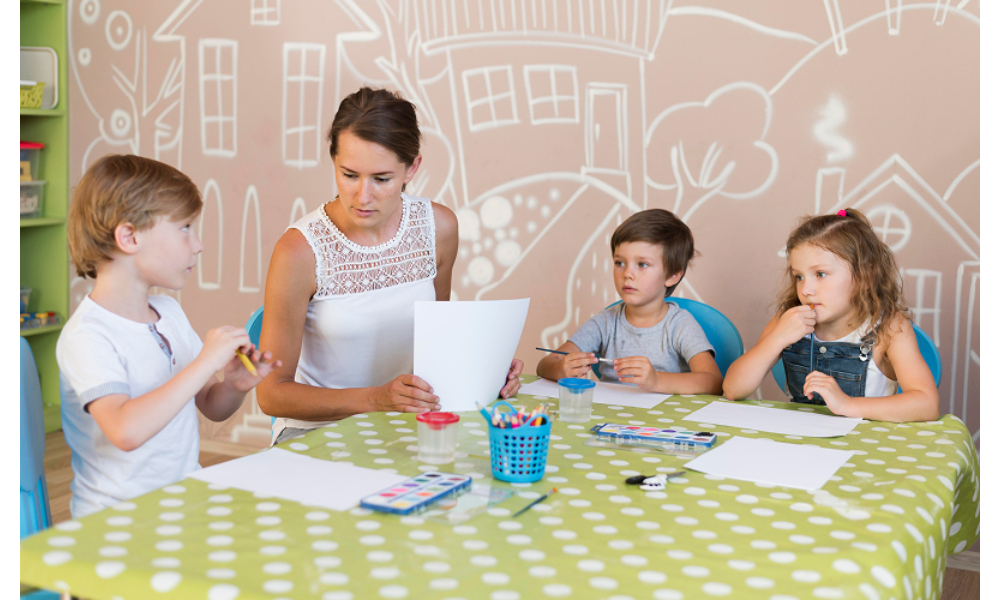
Play-based learning forms the foundation of effective immersion programmes. Through songs, role-play, games, and hands-on activities, children engage with Mandarin in ways that feel enjoyable and relevant. Teachers guide interactions carefully, reinforcing vocabulary and phrases through repetition and context rather than direct instruction. This method helps children retain language more effectively and encourages them to use Mandarin spontaneously during play.
Daily routines also reinforce language learning. Simple actions such as greeting teachers, tidying up, or preparing meals become opportunities to practise Mandarin naturally. In a well-designed global preschool, the classroom environment supports this process with visual cues, bilingual labels, and culturally relevant materials. These consistent touchpoints help children build familiarity and confidence, allowing Mandarin to become part of their everyday thinking rather than a separate task.
Benefits of Chinese Immersion in a Global Preschool
A Chinese immersion preschool does more than teach language skills. It helps children develop cognitive flexibility, cultural awareness, and stronger problem-solving abilities. Exposure to two languages at an early age encourages children to switch between linguistic systems, which supports memory and executive function. These benefits often extend into later academic years, giving children an advantage when formal language learning begins in primary school.
Within a global preschool, children also gain exposure to diverse perspectives and international-minded values. Schools such as Odyssey – The Global Preschool integrate language immersion with inquiry-based learning, social development, and global awareness. This approach prepares children not only to communicate in Mandarin but also to engage confidently in multicultural environments.
What Parents Should Look for in an Immersion Programme
Parents considering a Chinese immersion preschool should look beyond language claims and evaluate how immersion fits into the overall curriculum. Qualified bilingual educators, clear communication strategies, and a supportive transition process matter greatly, especially for children new to Mandarin. A strong programme explains how teachers support comprehension, encourage participation, and monitor progress without any pressure.
It also helps to assess how the school balances Mandarin with English instruction. In a reputable global preschool, teachers ensure children feel emotionally secure while gradually building language confidence. Parent engagement, regular updates, and alignment with Singapore’s early childhood standards further indicate a well-structured immersion environment that supports long-term development.
Conclusion
A Chinese immersion preschool offers young children a practical and effective way to develop Mandarin through daily interaction, play, and routine. When delivered through a global preschool, immersion supports language growth alongside cognitive and social development. For families in Singapore, this approach builds a strong foundation for bilingualism and future learning.
Contact Odyssey – The Global Preschool to discover how immersive language learning supports your child’s growth.